WEB / SEP 2026 / 6 MIN read
Core Web Vitals Just Got Stricter. What the 2026 INP Update Means for Your Conversions
Here's a number worth sitting with: according to the most recent Chrome User Experience Report data, barely more than half of tracked websites pass all three Core Web Vitals at once. Most fail because of one weak metric dragging two healthy ones down with it, not because everything is broken. And in the last few months, Google made a quiet change to how one of those metrics gets measured, which means a site that looked fine last quarter can look worse this quarter without anyone touching a line of code.
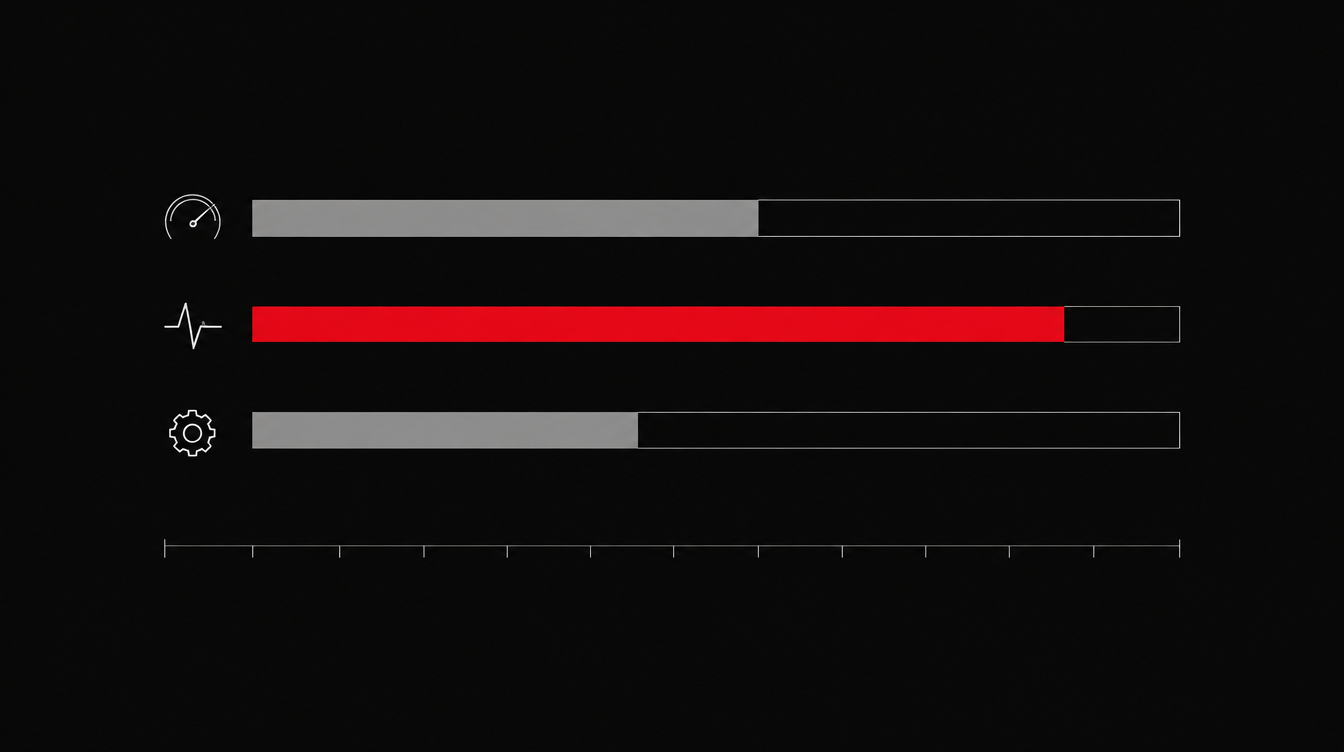
The Three Metrics That Count in 2026
- LCP (Largest Contentful Paint): how long the biggest visible element, usually a hero image or headline, takes to render. Target: under 2.5 seconds.
- INP (Interaction to Next Paint): how quickly the page responds to every click, tap, and keystroke, not just the first one. Target: under 200 milliseconds.
- CLS (Cumulative Layout Shift): how much content jumps around after it loads. Target: under 0.1.
INP replaced First Input Delay as the official responsiveness metric back in March 2024. If your team, your agency, or your reporting dashboard is still talking about FID, that reporting is out of date.
What Actually Changed
The published thresholds didn't move. What changed is how sustained latency gets weighted inside INP's calculation. The old averaging approach could hide a genuinely painful moment, a checkout button that stutters for half a second, behind a series of fast scroll taps. The updated measurement leans harder on those sustained slow interactions, which is a more honest picture of what a frustrated visitor actually experiences. It's also why a site that sat comfortably inside the "good" band can show worse numbers this month for reasons that have nothing to do with new code.
Layered on top of that, the March 2026 core update increased how much weight Core Web Vitals carry in rankings overall. Sites that were already passing climbed. Sites that weren't saw real drops, in some categories significant ones.
Why This Is a Revenue Problem, Not Just a Dev Problem
Core Web Vitals are a proxy for whether people feel comfortable taking action on your site. A hero section that loads too slowly costs attention before a visitor even sees what you offer. A button that lags when tapped costs trust at the exact moment someone was ready to act. A layout that shifts as someone reaches for "Book Now" costs the conversion outright.
It's not just Google watching this either. AI search tools like ChatGPT, Perplexity, and Copilot are increasingly factored into how people discover businesses, and they tend to deprioritize slow or error-prone sources when choosing what to cite, the same instinct Google has had for years, applied to a newer surface.
The Fix
- Audit field data, not lab scores. Search Console and CrUX show what real visitors on real devices actually experienced. Lighthouse is useful for diagnosis, but a good lab score with poor field data is not a passing site.
- Fix LCP first if it's failing. Compress and preload the hero image, move to a CDN, and cut third-party scripts blocking the main render path.
- Fix INP by trimming JavaScript. Break up long-running tasks, defer non-critical scripts, and audit third-party embeds, chat widgets and tracking pixels are common culprits.
- Fix CLS by reserving space. Set explicit dimensions for images and embeds, and keep ad or third-party containers from popping in after the fact.
- Put it on a quarterly cadence. This isn't a one-time project. Thresholds and measurement methods keep shifting, and a site that passes today can slip without any changes on your end.
Frequently Asked Questions
Do I need a developer to fix this, or can I do it myself?
Image compression and third-party script audits are often doable without a developer. Long-task splitting and rendering-path work generally need one, especially on complex or app-like sites.
How much ranking weight do Core Web Vitals really carry?
Less than relevance and content quality, Google's own documentation is explicit about that, but the weight has grown, and the conversion impact of a slow, jumpy site is real regardless of what it does to rankings.
How fast will fixes show up in reporting?
CrUX field data is a rolling 28-day average, so expect a few weeks before improvements are fully reflected, even after the fix ships.
Conclusion
Site speed stopped being a "nice to have" line item a while ago. In 2026 it's closer to a sales desk that's either open or closed at the exact moment someone's ready to buy. The businesses passing all three metrics aren't necessarily the ones with the biggest dev budgets, they're the ones auditing quarterly instead of once and forgetting about it.
Not sure where your site is losing conversions to speed? Get a free Core Web Vitals audit and see exactly which metric is costing you.